

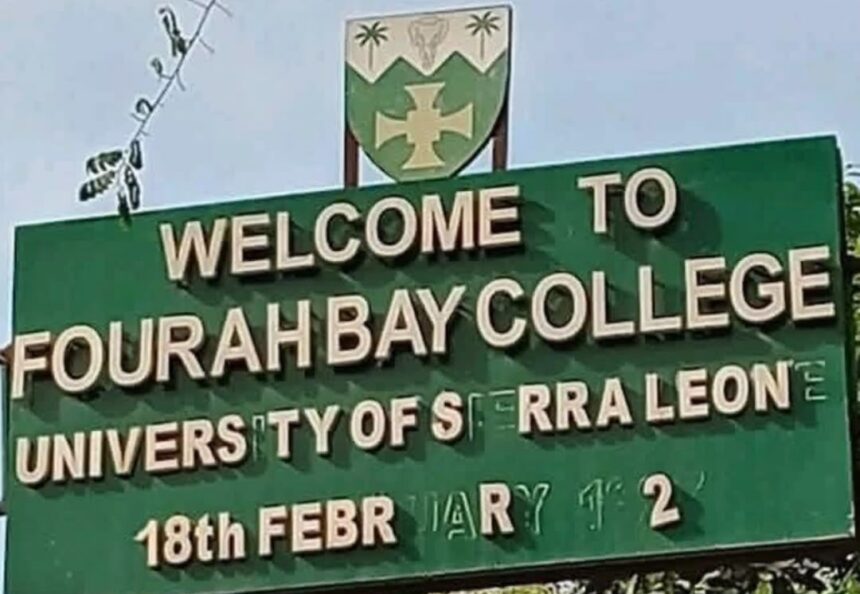
As Fourah Bay College (FBC), popularly known as the “Athens of West Africa,” prepares to celebrate its historic 200th anniversary in 2027, a worsening water crisis is threatening life and learning on campus, raising serious concerns about the institution’s readiness to host the landmark event.
For several years, the college has grappled with persistent water shortages. However, students, lecturers, and administrators say the situation has now reached critical levels, significantly affecting academic activities and the general welfare of the university community.
Students reportedly wake up before dawn in search of water for drinking, bathing, and other daily needs, while lecturers spend considerable time trying to secure basic water supplies for their homes. The ongoing shortage has also contributed to poor sanitation conditions in student hostels, creating health and hygiene concerns across the campus.
Speaking on the issue, the President of the Academic Staff Association (ASA), Ambrose Rogers, explained that much of the college’s water infrastructure is outdated and no longer functioning efficiently.
According to Rogers, Fourah Bay College operates its own independent water supply system, which is both technically demanding and expensive to maintain. He further noted that the institution does not receive water from the leaving the university heavily dependent on its aging facilities.

The increasing student population, coupled with the rapid expansion of surrounding communities, has placed enormous pressure on the already limited water supply,” Rogers stated. “This has had a direct impact on teaching and learning, as well as on the welfare of academic and non-academic staff.”
The growing crisis has sparked concerns among stakeholders, particularly as the college approaches its bicentenary celebration an event expected to attract alumni, dignitaries, scholars, and visitors from across Sierra Leone and beyond.

Many within the university community are calling for urgent intervention from the government, development partners, and relevant authorities to rehabilitate and modernize the institution’s water infrastructure. They argue that addressing the water challenge is essential not only for the success of the 200th anniversary celebrations but also for safeguarding the quality of education and living conditions at one of Africa’s oldest institutions of higher learning.
As preparations continue for the historic milestone, the water crisis remains a pressing issue that demands immediate attention if Fourah Bay College is to fully uphold its legacy as a premier center of academic excellence in West Africa.